Printable Planning
Printable To-Do List: A Simple Way to Start
Use a printable to-do list to see what matters today, set the rest aside, and make room for a calmer week.

A printable to-do list is not meant to hold every loose thought, hope, and obligation in your life. Its best job is much smaller: help you see the next few things that matter, then put the rest somewhere safe until it is their turn.
That simple difference can make a list feel calmer. Instead of facing a page that proves how much is waiting, you can make one honest decision at a time. What belongs to today? What needs a specific time? What can wait without being forgotten? A piece of paper is enough to give those questions a useful place to land.
Start with the day you actually have
Before you write tasks, look at the shape of your day. Add appointments, school pickups, work hours, practices, and anything else that already claims time. A day with a morning appointment and an afternoon full of errands cannot hold the same list as a quiet day at home. Let the list reflect reality from the beginning.
Then write down the tasks that need your attention. Keep them plain and specific. “Call the dentist” is easier to begin than “deal with appointments.” “Start one load of laundry” is easier to see than “catch up on the house.” Clear language saves you from having to figure out the first step again when you return to the page later.
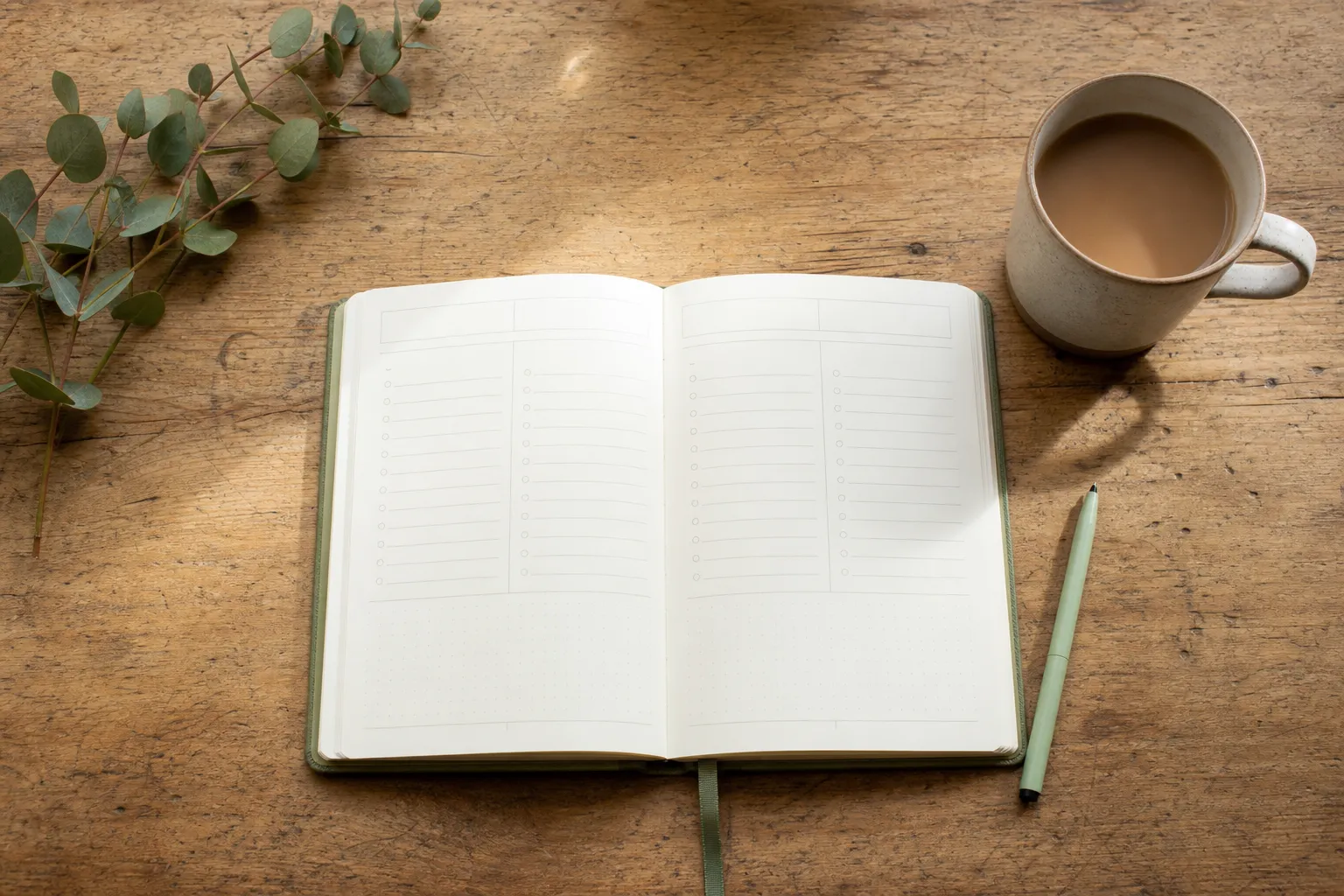
A good printable page does not need to be fancy. It needs enough room for a short list, a few notes, and the things you do not want to keep carrying in your head. You can find simple paper tools for everyday routines in Nana’s Everyday Trackers collection.
Choose three priorities, then stop
The whole list may be long. Today’s priorities should not be. Circle, star, or rewrite the three tasks that would make the day feel meaningfully lighter if they were done. Those are the tasks to see first when the phone rings, the schedule shifts, or you lose your train of thought.
Your three can be a mix of different kinds of work: one task that keeps the household moving, one task you have been putting off, and one personal need that should not disappear just because life is busy. On some days, “take a short walk” or “sit down with a cup of tea before the next errand” belongs on the list just as much as an email or a load of laundry.
There is no prize for squeezing twelve priorities into three spaces. If it cannot realistically happen today, let it stay on the larger list. Choosing fewer things is not lowering the bar. It is making a promise you can keep.

Give every other task a safe place
A short daily list only works if the remaining tasks have somewhere to go. Create a small “Later” column, a second sheet, or a running list at the back of your planner. This is where you can put the birthday gift idea, the closet you want to sort, the recipe you want to try, and the phone call that does not need to happen before dinner.
Seeing a task in the later list tells your mind it has been noticed. It also stops every possible task from competing with the ones that truly need today. When you finish a priority early, you can look at the later list and choose something that fits the time and energy you have left.
Try to separate tasks that have a real deadline from tasks that are simply a good idea. A school form due Friday belongs near the top. “Look at paint colors” can wait for a weekend with room to enjoy it. This one small distinction makes the list feel less urgent and more honest.

Write tasks small enough to begin
Some tasks feel heavy because they are really several decisions wearing one name. “Organize the garage” may mean find boxes, decide what to keep, schedule a donation drop-off, and ask someone to help. That does not belong on a daily list as one vague line.
Break it into the first useful action. “Choose one shelf in the garage” or “find two boxes for donations” gives you a place to start. You do not have to map out every part of a project before you begin, but you do need a next step that can happen in the time you have.
This approach is especially helpful for the invisible work of family life. “Get ready for school” becomes “sign the permission slip.” “Make dinner easier” becomes “move chicken from the freezer.” Small actions can look humble on paper, but they are often what keep the week from becoming a scramble.
Match the task to a part of the day
A to-do list becomes more useful when you notice when a task can happen. You do not need a strict hour-by-hour plan. Broad places are enough: morning, after lunch, after school, or evening. Add a little mark beside the task, or write it in the part of the day where it makes sense.
This keeps you from placing three phone calls on a list you will only look at after offices have closed. It also gives home tasks a more natural rhythm. A grocery order might happen during a quiet coffee break. A quick kitchen reset might belong just after dinner. A message to a teacher may be easier to send before the school day starts.
When your days need a little more structure, pair the list with a daily planner routine. The planner can hold fixed commitments, while the to-do list keeps your chosen actions clear.
Keep the list where life happens
A printable list only helps when you can see it. Put it where you naturally pause: on a kitchen counter, beside the coffee maker, on your desk, or clipped inside the planner you already open. If the paper lives in a drawer, it asks you to remember the very thing it was meant to help you remember.
Use one pen and let the page be ordinary. You can add color, stickers, or a pretty binder if those details make you happy, but they are not the beginning of a useful routine. The beginning is looking at the page long enough to choose the next right thing.
For family tasks and everyday home rhythms, Nana’s Home & Family pages can give the details of a busy week a little more room to breathe. A small page in the right place is often more helpful than a complicated system you only use on your most organized day.
Cross off, move forward, or let go
At the end of the day, take one minute to look at what is left. Some tasks can be checked off. Some can move to a specific day. A few may not need to happen at all. Each option is useful.
Try not to copy every unfinished task forward without looking at it. Rewriting the same item over and over can turn a list into a quiet source of guilt. Ask whether the task is still important, whether it needs a smaller first step, or whether it belongs on a later list until the right time comes around.
Sometimes the right choice is to leave the task behind. Plans change. A list should make space for what matters now, not keep score of every intention you once had. The goal is a page that helps you return to your day with a little more clarity.
Use a small weekly reset
Once a week, glance at the later list before a new page begins. Look for appointments, birthdays, school notes, meals, or errands that need a little preparation. Move only the things that have earned a place in the coming week. Everything else can stay where it is.
This reset does not need to become a Sunday project. Ten quiet minutes can be enough to print a fresh page, carry forward one task, and decide what will make the week feel steadier. It is also a good moment to make room for something that restores you, such as a walk, a family movie night, or a little time for reflection.

Use different lists for different jobs
Not every list needs to live on the same page. A grocery list has one job. A packing list has another. A daily to-do list helps you choose what happens next. When every kind of reminder gets pushed onto one crowded sheet, it becomes harder to see what deserves your attention right now.
Try keeping repeatable lists close to the places where you use them. A grocery list can live on the fridge. A school-morning checklist can stay by the door. A short daily page can sit where you drink your coffee or open your laptop. Each page becomes easier to trust when it has one clear purpose.
This also makes shared family life easier to hold. You may want one page for household tasks and another for the details only you need to remember. The goal is not to make more paper. It is to give important information a home that makes sense, so you are not mentally sorting it all day long.
Let the list support a gentler routine
A to-do list can be practical without becoming hard on you. Some days will be full of visible progress. Other days will be spent caring for someone, handling an interruption, resting, or doing work that never makes it onto paper. A blank checkbox does not tell the whole story of a day.
When the list starts to feel discouraging, make it smaller. Choose one task that will help tomorrow, one task that helps your home, and one task that helps you. That might mean sending the message you have been avoiding, clearing the kitchen counter, and taking ten quiet minutes to read. A short list can still hold a meaningful day.
Nana’s Faith & Reflection pages are a useful companion when you want the page beside your tasks to make room for gratitude, prayer, or a thought worth keeping. The list does not have to carry everything. It can simply help you clear enough space to notice what matters.
Find a page that supports your rhythm
The best printable to-do list is not the one with the most boxes. It is the one that gives you a calmer place to begin. Start with the day you have, choose three priorities, keep a safe later list, and let unfinished tasks tell you what needs a different decision.
Nana’s Paper Trail creates simple printable tools for full, ordinary days. Browse the collection of planners, trackers, journals, and home organization pages to find a page that helps you make room for what matters.
Frequently asked questions
What should I put on a printable to-do list?
Put down the tasks that need a decision or action, then choose only a few that truly belong to today. Appointments, errands, household tasks, and calls can all have a place, but the daily priority list should stay short enough to use.
How many things should be on a to-do list each day?
Three priorities are a good starting point. Keep a separate later list for everything else, then move one or two items forward when there is room. A list is useful when it helps you decide, not when it proves there is more to do than one day can hold.
Should I use a daily or weekly to-do list?
A daily list is best for deciding what happens next. A weekly list is useful for catching appointments, errands, and tasks that need a little preparation. Many people use both: a weekly glance for the big picture, then a short daily list for action.
What do I do with unfinished tasks?
Look at each unfinished task before automatically moving it forward. Keep it only if it still matters, give it a specific day if it needs one, or let it go if it no longer deserves your attention. A task does not become more important simply because it has been copied several times.
Related posts
Daily Planner Printable: A Routine That Sticks
A gentle daily planning rhythm that does not ask you to do more than real life allows.
Read the guide ↗